Creditinfo Group, TASDEEQ, PACRA and APL partner with Pakistan Banks’ Association to facilitate wider access to housing finance

Consortium will develop a market-level application scorecard and income estimation model to boost financial inclusion in Pakistan
LONDON, UK, 21st October 2021 – Pakistan Banks’ Association (PBA) recently announced that it has entered into a strategic partnership with a consortium of leading financial services and technology businesses to improve access to finance for low-income segments of the population currently excluded from traditional housing finance.
The consortium, comprised of Creditinfo Group, a global credit information and fintech service provider; TASDEEQ, Pakistan’s first SBP Licensed Credit bureau, offering cutting-edge reports, statistical scores, and analytical tools for the financial industry for efficient credit risk and strategic decision making; Pakistan Credit Rating Agency (PACRA) and Analytics Pvt Ltd, a leading Artificial Intelligence, Business Analytics, Big Data Analytics and Data Sciences solutions provider, will work together to develop for PBA a market-level application scorecard and income estimation model aimed at streamlining risk assessments and enabling a wider pool of applicants to access financing for their housing needs.
The consortium brings together industry-leading credit risk analytics knowledge, alongside extensive experience in Pakistan and emerging markets globally. The development and deployment of the automated income estimation & credit assessment methodology will be overseen through the PBA platform.
This project is being managed by the PBA Technology Working Group, comprising CEOs and members of Bank Alfalah, HBL and Faysal Bank as well as the CEO of PBA and a senior official of State Bank of Pakistan. This is a novel and unique project, and the first of its kind in Pakistan, where a scorecard will be developed using an alternative source of data.
The scorecard project will support the Naya Pakistan Housing Programme (NPHP), a government-backed initiative providing low-cost, affordable housing to deserving individuals in Pakistan that is expected to be a catalyst to accelerated economic activity and increased job opportunities in the region following the negative impact of Covid-19.
Mr. Tawfiq Husain, CEO, PBA stated, “We are very excited with the transformational impact this project can have on our members’ consumer lending and credit initiation and risk management capabilities. Starting with Low Cost Housing Financing, we hope to be able to put this model to use for other products in consumer lending.”
Mr. Omar Khalid, COO TASDEEQ commented: “TASDEEQ, PACRA and Analytics together bring a diverse array of expertise to the project. This synergy coupled with Creditinfo’s comprehensive global experience will be vital in development of low-cost housing credit scoring and income estimation models for the existing as well as new-to-bank customers utilizing alternative data sources. We are excited to be working with PBA to provide the banks with tools for quick and accurate risk decision making and working towards a more financially inclusive Pakistan.”
Mr. Samuel White, Regional Director, Creditinfo, commented on the partnership: “Our unique global experience will be complemented by the consortium partners’ local market knowledge to develop a robust credit risk and affordability solution in Pakistan. The project will provide PBA members with the required tools to make accurate risk decisions on underserved segments of the population, which is fundamental to increasing access to housing finance. Creditinfo is excited to work with the PBA to support the expansion of financial inclusion in Pakistan and help drive economic activity in the region”.
-ENDS-
About Creditinfo
Established in 1997 and headquartered in London, UK, Creditinfo is a provider of credit information and risk management solutions worldwide. As one of the fastest growing companies in its field, Creditinfo facilitates access to finance, through intelligent information, software and analytics solutions.
With more than 30 credit bureaus running today, Creditinfo has the largest global presence in the field of credit risk management, with a significantly greater footprint than competitors. For decades it has provided business information, risk management and credit bureau solutions to some of the largest, lenders, governments and central banks globally – all with the aim of increasing financial inclusion and generating economic growth by allowing credit access for SMEs and individuals.
For more information, please visit www.creditinfo.com
About TADSDEEQ
TASDEEQ is Pakistan’s first SBP Licensed Credit bureau and a leading credit information services company that leverages data analytics, technology, and industry knowledge to enable financial and non-financial institutions achieve their strategic goals with minimizing their credit risk and help consumers secure their future.
For more information, please visit www.tasdeeq.com
About PACRA
PACRA is, transforming both the rating business and the industry in line with the best practices. Today PACRA has more than 450 opinions outstanding and covering 60+ sectors and sub-sectors of economy.
Since inception, PACRA has over 8,000 rating opinion a testament of PACRA’s expertise, exceptional command, market leadership, and the confidence reposed in its opinions. PACRA rates more than 40% of KSE-100 index companies and 25% of the private sector debt, translating into a rating opinion on every 4th Rupee of debt raised in Pakistan.
The same trust and confidence have also been reposed by foreign regulators in PACRA’s ability and expertise as a CRA. PACRA has entered into a Technical Collaboration Agreements for the formation and operations of CRAs in Bangladesh (National Credit Ratings) and Sri Lanka (Lanka Rating Agency).
For more information, please visit www.pacra.com
About APL
Analytics (branded as Tenx.ai in North America) is a leading Artificial Intelligence, Business Analytics, Big Data Analytics and Data Sciences solutions provider. Having customers in the United States, Middle East and Pakistan, the company has accomplished a proven track record of successfully delivering high impact and complex projects.
For more information, please visit www.analytics.com.pk
About PBA
Pakistan Banks’ Association is a private limited company incorporated under the Companies Act 1913, (now the Companies Act 2017). The principal activity of the Association is to promote, advance and protect rights, privileges and interests of member banks/ financial institutions. Currently, it has 44 members on all Pakistan basis.
For more information, please visit www.pakistanbanks.org.pk
Media Contacts:
Matt Silver
Babel PR for Creditinfo
T: +44 (0)207 199 3977
Average pay for women grows in Lithuania

The average pay for women has grown in 56 sectors after starting releasing information on gender pay gap. Within a matter of three months women’s average monthly pay increased by EUR 20, compared against an EUR 15 increase for men.
After Sodra (Lithuanian Social Security Authority) started publishing sectoral data on average gender pay gap, women’s average pay has grown in 56 sectors out of 81 within the past three months. Women’s monthly average pay increased from EUR 2 to EUR 325 in various sectors. In 13 sectors women’s pay grew by over 10% despite some economic activities where gender pay gap continued to grow for men, these are: insurance, re-insurance, pension accumulation companies, power generation, gas and air conditioning companies, and the pharmaceutical industry.
According to the analysis conducted by Creditinfo Lithuania, from April to July women’s average pay grew from 0.1% to 36.1%, or from EUR 2 to EUR 325 per month. In thirteen business sectors, women’s pay increased by over 10%, with the most remarkable growth reported in accommodation (16.8%), catering and supply of beverages (21.6%), gambling or betting industry (36.1%).
An increase from 10 to 14% in women’s average pay was reported in leather production and water transport, postal and courier activities, organisation of travels, sports activities, and events management, as well as several other sectors, manufacturing of coke and refined petrochemicals, cinema and television programme production, wastewater treatment, programme production and broadcasting, manufacturing of chemicals, extraction of oil and gas.
However, from the already listed sectors only in two of them (postal and courier services, oil and gas extraction) women’s average pay is higher than men’s amounting to EUR 1,856 (cf. men’s pay of EUR 1,552) and EUR 2,851 (cf. men’s pay of EUR 2,248), respectively; whereas in all the other sectors men earn more than women on average.
An average men’s pay is EUR 185 higher than women’s, but the gender gap has been narrowing
Despite the narrowing gender pay gap reported from April to July, in Lithuania men used to earn EUR 185 more than women: men’s average pay currently stands at EUR 1,596 against EUR 1,411 for women. Last April the gap reached EUR 190, with men’s average pay standing at EUR 1,581 against women’s EUR 1,391.
Aurimas Kačinskas, CEO of Creditinfo Lithuania, notes that in the absence of a more in-depth analysis, it is not feasible to assess gender pay gap; examination must be made into the types of positions held by men and women in order to identify the reasons behind differences in salaries.
“Publication of average pay is yet another indicator which can be used by future employees or partners to assess companies; knowledge of this information encourages a better understanding and awareness of the specificities of every company”, A. Kačinskas said.
The gap continues to grow in insurance, reinsurance, financial and telecommunication services, and pharmaceutical industry
Against the background of growing women’s average pay in most of the sectors, in 22 economic sectors the gender pay gap is widening. An average women’s pay dropped by 17.9% in insurance, reinsurance, and pension accumulation sector, where men earned EUR 3,179 per month on average compared to EUR 2,284 earned by women. A gender pay gap widened further from 11.1 to 11.5% in research and technical activities, pharmaceutical industry, power and gas supply, and air conditioning.
Gender pay gap continues to enlarge in the beverages’ industry, immovable property, construction of buildings, telecommunications, and financial sectors.
For instance, in telecommunications an average monthly women’s pay in July stood at EUR 1,602 compared against EUR 2,154 for men, in the financial sector these figures were EUR 2,433 and EUR 3,620, respectively.
The yawning gender pay gap is reported in air transport, where men earn EUR 3,932 per month on average, compared with women’s average monthly pay of EUR 2,385. Human resource management experts put this gap down to a higher number of men engaged in the aviation sector in better paid positions of pilots, whereas women work as flight attendants.
Meanwhile, it is worth mentioning that over three months the number of economic sectors with women earning more than men grew from 9 to 11. The sectors of education, libraries, land transport and transport via pipelines, social work, care services, furniture production, postal and courier services, tobacco and metal production were recently joined by fisheries and aquaculture companies, and motor vehicle manufacturing.
Earlier last June it was reported that, as of last April, out of 81 economic sectors in as many as 72 men receive higher pay than women.
For more information please contact:
Aurimas Kačinskas, CEO of Creditinfo Lithuania, (aurimas.kacinskas@creditinfo.lt; +37061810110).
Hrefna Ösp appointed new CEO of Creditinfo Iceland

Press Release
LONDON, UK, 23rd September, 2021
Hrefna Ösp Sigfinnsdóttir has been appointed as the new CEO of Creditinfo Iceland. She previously held the position of Managing Director of Asset Management and Brokerage at Landsbankinn. She has over 27 years of experience in the finance industry and will bring her wealth of knowledge and expertise to Creditinfo Iceland and the company at large.
‘We warmly welcome Hrefna Ösp to work and we are very happy to have her join us. Hrefna has extensive experience and a clear vision of the functioning of financial markets, which will be a major driver in moving Creditinfo’s journey forward. Hrefna joins a team of highly motivated staff who are also excited to have her on board’ says Paul Randall, CEO of Creditinfo Group.
“I am especially excited to join Creditinfo. I have followed the company since its establishment and have been a loyal customer. I know that Creditinfo has a very strong team that provides excellent service with powerful solutions. It is exciting to become part of an international ecosystem such as Creditinfo Group which is widespread throughout four continents, I foresee many growth opportunities for me as a professional and Creditinfo Iceland as a team. I am especially keen to further develop and provide solutions the market needs, such as open banking and increased demand for knowledge of customers and the origin of capital” says Hrefna Ösp.
Hrefna holds a Degree in Business Administration from the University of Iceland and a certification exam in securities trading.
She resigned from Landsbankinn this autumn after having been there since 2010. Before that, she worked as a fund manager at Arev Securities Company from 2007. She also worked as the Director of the Listing Division and as an expert on the same at the Iceland Stock Exchange from 1998-2006. Hrefna previously worked as the Director of Personal Services at Fjárvangur and was also an employee of the Central Bank of Iceland’s Monetary Policy Department.
Hrefna has also served on the boards of several companies both in Iceland and abroad and is also one of the founding members of IcelandSIF, an independent forum for discussion and education on responsible and sustainable investments.
The Creditinfo Team welcomes Hrefna and is looking forward to start collaborating with her.
PR contacts:
Caterina Ponsicchi,
Marketing Director,
Creditinfo Lithuania ISO27001 certified

Creditinfo Lietuva collects, stores and analyses information about the creditworthiness of businesses and individuals, assesses their credit history and assigns appropriate credit ratings. To meet the highest data security standards, the bureau introduced an ISO certified information security management system in 2014.
The system complies with the requirements of ISO/IEC 27001:2013 and is constantly reviewed, revised and subject to annual audits. On 26 April 2021, “Creditinfo Lietuva” successfully passed the periodical annual audit performed by “Bureau Veritas”.
The audit assessed the entire organization against 22 compliance criteria, including the competence and data security awareness of leadership and staff, information security management, business management procedures, sharing of responsibilities, management of documents, planning and control, activity monitoring and analysis, internal audit procedures, ability to swiftly resolve issues, continuous improvement, etc.
The audit also assessed the competence of employees of all levels, security of the information systems, IT and support, compliance of the information analysis and sales departments with the ISO requirements. The physical security and business policies of Creditinfo Lietuva were addressed by the audit as well.
The 2021 audit concluded that the information security management system of Creditinfo Lietuva meets the highest standards and can be considered a good practice. Data security in the company is given the highest priority, internal and external risks are constantly monitored and analyzed, and the company is prepared to address the risks in a professional manner.
In boosting businesses, we could spurt like Ferraris, but we’re moving at Turtle speed

The analysis of the use of funds and current tendencies in the country’s economy leads to the obvious conclusion that we use the available financial resources in Lithuania in a too conservative way, and, instead of the opportunity to exploit the situation and spurt at the capacity of Ferrari, we choose a safe but a very slow growth at the speed of a Turtle.
From a psychological point of view, the situation is understandable, since along with the usual risks – commercial, technological and many others, business today faces the biggest challenge of regulation.
Recalling the lessons of 2009-2011 crisis, both business companies and banks more often ground the management of their economic situation on risk minimization. In other words, for reasons of caution, they would rather not grant a loan than allot time for a more thorough analysis of the situation.
However, a qualified and comprehensive risk management provide opportunities for business development, especially now, when we have a sufficient number of automated management tools based on data.
Several weeks ago, a survey carried out by the Bank of Lithuania (LB) showed that at the present moment, a more careful consideration should be given to hotels, restaurants, and part of real estate companies. However, the significantly reduced or discontinued funding has had a negative effect on an absolute majority of business sectors whose situation during the pandemic has not gotten worse and has even improved.
Capital adequacy is good, but a reluctance to lend money remains
Responsible lending constitutes the backbone of any economy, and Lithuanian business has learned to take a responsible attitude to loan repayments. For example, Lithuania is marked out among other countries of the European Union (EU) by the smallest – only 3% of all loan portfolio – part of business enterprises which have made use of a moratorium on loans declared in the spring of 2020.
In addition, according to the Bank of Lithuania, part of non-performing loans has been regularly decreasing and now has reached the lowest historical level of 1.5%. In other words, in their concern about high credit ratings and a good financial reputation, the enterprises are doing their utmost to repay both loans and interest on time.
With full knowledge of the aforementioned facts, what surprises, is a particularly prudent financing of business or strict conditions of granting loans, especially taking into account the fact that the population’s and enterprises’ deposits have reached record heights on a global scale. In Lithuania, the capital adequacy ratio of the bank sector having reached the highest bar of 25% in 2015, has remained at the top and currently fluctuates at around 22%.
The situation is changing dynamically, but every company must be evaluated separately
On the other hand, the analysis of the financial situation of enterprises warns that the situation in the market is changing dynamically. For example, if in 2020, 11% of enterprises entered the highest and high classes of bankruptcy risk, this year there are 17% of such enterprises. There is a greater probability that part of enterprises may fall behind on their payments. For example, in 2020 a high and the highest risk of payment delays was attributed to 18% of companies, however, this year the number of such enterprises has increased by 31%.
And still, the analysis of separate sectors provides more clarity. For example, the number of construction companies of high and the highest classes of risk has risen over the year from 19 % in (2020) to 23% in (2021). And in the transport sector from 15% to 23% respectively. A greater emphasis should be laid on the situation of trading companies. The companies of this sector have split into two blocs – companies whose activity was restricted and the financial situation was getting worse, and the ones whose situation was changing for the better.
Unfortunately, in the catering sector the situation is still the worst. Last year 30% of these companies were classified as having high or the highest risk, and this year this figure reached 45%. However, it is believed that a gradual loosening of business restrictions would enable the recovering of this sector.
The services sector is now doing well, – part of its enterprises of high and highest risk remains moderate, although it has increased by 6% to 9%. Every enterprise must be evaluated individually, and if the financial position and discipline are strong, there are no reasons for the discontinuation of financing such businesses.
We are living in many-speed economic conditions. When some enterprises are made to stop their activity, others experience a boom and have successfully moved their business to digital space. The EU business support measures have deferred the declaration of bankruptcy for part of enterprises. However, the situation can change even more dynamically when the states‘ support is withdrawn. This aspect makes one carefully supervise one‘s business partners, require quarterly financial reports, a record of the quality of transparent property and its declaration.
What rules would I most recommend to comply with? The enterprises which have the experience of assessing their partners, know that information in credit bureau systems which is updated every day, includes tens of various indicators, and algorithms which calculate creditworthiness and risk, evaluate more than 100 different parameters. However, at present, in evaluating the new partners‘ financial statements, activities or shareholders‘ business relationships, I would suggest paying particular attention to negative information. Check if there are no court actions, if the number of employees has not drastically decreased, and if there are no recorded arrears. Under the conditions of big flow of information your business could be assisted by an early warning system which would allow to see the threatening changes and thus, react immediately.
We have a sufficient number of tools of risk management, it is time to make a more efficient use of capital
Current technological innovations make it possible to both disclose and find information about the buyer‘s or partner‘s debts during a few seconds. Normally, the essential information about overdue payments is freely available. Therefore, I would urge again that every granting of credit should be considered separately. Evaluating the aforementioned figures, it becomes obvious that we have not used great possibilities to help economy recover as soon as possible. Guarding ourselves against a very small part of unreliable debtors, we punish a far bigger part of disciplined businesses.
An operative exchange of information about debtors could assist us and others in making more precise and quicker decisions as well as preventing a domino effect, when the debt of one enterprise establishes the whole chain of overdue payments.
Let us go back to strategies of a Turtle or Ferrari. There are different tools of risk management. It is possible to insure oneself against taking on any risk. In this case the enterprise will grow slowly.
Or, on the contrary, one can use all the capacities and possibilities of Ferrari. This car has not only fast acceleration and high speed, but also a well-operating brake system which in business, is analogous to data-based risk management.
There is no doubt that crediting must be responsible and take into consideration all the risks. However, at present there are enough reliable tools which assist in making optimal decisions. Therefore we can better employ capital, promote the country‘s business and stimulate its economy.
Jekaterina Rojaka,
Chief Commercial Officer,
Creditinfo Lithuania
Creditinfo appoints Global Sales Leader

Creditinfo appoints former Experian consultant as global sales leader
Decision analytics leader welcomes Burak Kilicoglu to growth-focused senior role
LONDON, UK, 30th March 2021 – Creditinfo Group, the leading global credit information and decision analytics provider, today announces that it has appointed Burak Kilicoglu as its new Director of Global Markets to guide Creditinfo’s global sales teams strategically and operationally through the company’s next phase of growth.
Burak joins Creditinfo following 15 years at Experian where he provided strategic risk management consultancy on debt management, customer management and originations for retail banking as well as telecommunications sectors. In his new role he will be based out of the company’s Monaco office and set and execute a strategic vision and roadmap for sales in collaboration with other Creditinfo executives and key stakeholders.
With over 25 years of experience in the financial services industry, Burak will act as a key liaison between all business unit leaders to grow the global sales team’s capabilities, keeping pace with the ever-growing and changing needs of the business.
“Creditinfo continues to grow and develop as we realize our ambitions to enable corporates, SMEs and individuals be active players in the economy” commented Paul Randall, CEO at Creditinfo Group. “We’re delighted to bring Burak onboard to help us push forward as a business and further our ability to facilitate access to finance while also reducing risk for banks. Burak has a wealth of knowledge and experience that will make him a valuable asset to our business as we embark on our next phase of growth. His appointment, coupled with our new shareholder structure, brings fresh energy, thinking and impetus to our operations and will help us to capitalize on our unique position in the market.”
Burak Kilicoglu, Director of Global Markets at Creditinfo, commented, “I’m excited to be joining Creditinfo at such an important part of its growth journey. This is a company with significant growth potential and incredible products and technology to take to market. As the fintech industry continues to grow in global markets there is a huge opportunity to help organizations gauge their risk appetite and make informed and intelligent lending decisions based on a wide range of data source and market leading analytics technology. I’m very much looking forward to leading that charge and working with Creditinfo’s sales team and senior leaders to work towards expanding our market penetration and helping our clients make informed decisions with confidence.”
Prior to joining Experian, Burak was a VP in the European Card Services team at Bank of America, and before that held portfolio management roles at Discover Financial Services and Transamerica Retail Finance. He attended the University of Notre Dame – Mendoza College where he graduated with an MBA. He also has a MS in Industrial Engineering from the Istanbul Technical University.
This appointment follows the announcement of a new shareholder structure, with private equity firm Levine Leichtman Capital Partners as majority shareholders, and the appointment of Paul Randall as Group CEO to lead Creditinfo through a period of development and global expansion.
-ENDS-
About Creditinfo
Established in 1997 and headquartered in Reykjavík, Iceland, Creditinfo is a provider of credit information and risk management solutions worldwide. As one of the fastest-growing companies in its field, Creditinfo facilitates access to finance, through intelligent information, software and decision analytics solutions.
With more than 30 credit bureaus running today, Creditinfo has the most considerable global presence in this field of credit risk management, with a significantly greater footprint than competitors. For decades it has provided business information, risk management and credit bureau solutions to some of the largest, lenders, governments and central banks globally to increase financial inclusion and generate economic growth by allowing credit access for SMEs and individuals.
For more information, please visit www.creditinfo.com
Media Contacts:
Matt Silver
Babel Agency for Creditinfo Group
+44 (0)7769 266 452
Creditinfo IBCH (Ukraine) welcomes Kateryna Danylchenko as new GM

Kateryna has been appointed as GM of IBCH, a Credit Bureau and Analytics company in Ukraine in which Creditinfo has been a strategic investor since 2006.
Creditinfo Jamaica appoints John Matthew Sinclair as CEO

PRESS RELEASE
National Commercial Bank of Jamaica veteran joins Creditinfo team to help credit providers embrace digitalisation and boost financial inclusion.
Paul Randall at the Kafalah SME Financing Conference 2019
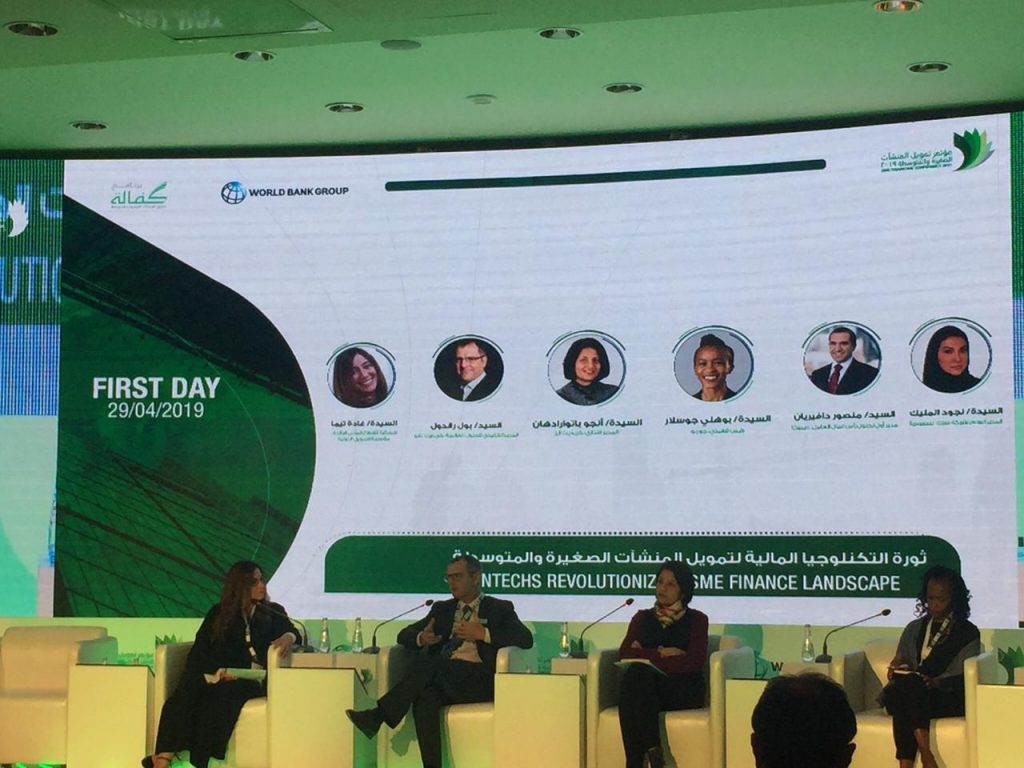
Kafalah SME Financing Conference was held in Riyadh, Saudi Arabia where they discussed current financing for SME’s in Saudi Arabia,how to build relationships between private and public FIs, government agencies and legislative bodies that support financing, current and future finance opportunities for specific business sectors and how to increase awareness of the most current international practices for financing SMEs.
Creditinfo Group awarded the Knowledge Prize 2019
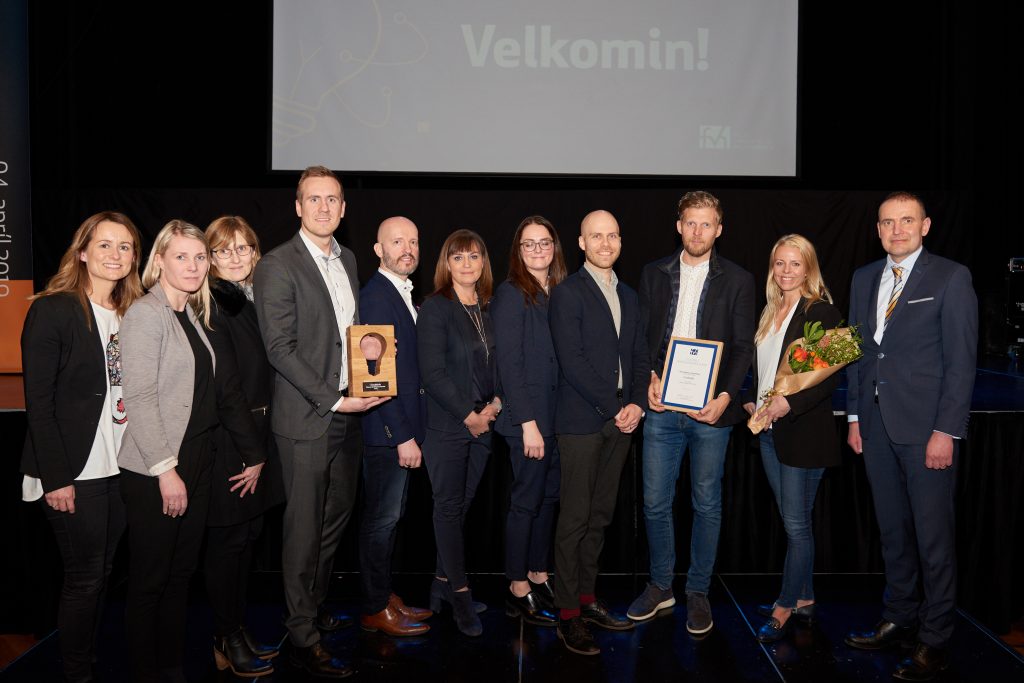
The Association of Business and Economics has chosen Creditinfo as the Knowledge company of the year 2019. Creditinfo Group was chosen as the Knowledge Company of the Year by the Association of Business and Economics. During the selection process, companies that have excelled in their international markets in the recent years were considered. Other companies that also came at the top include CCP, Marel and Nox Medical.