Creditinfo Group has acquired full ownership of Latvian credit bureau, KIB Latvia
Move reinforces Creditinfo Group’s long-term investment in financial inclusion and market growth in Latvia.
London, 21st April 2026 — Creditinfo Group, a global leader in credit information and data-driven solutions, today announced that it has completed acquisition of full ownership of KIB Latvia (AS “Kredīt Informācijas Birojs”), following 13 years of successful partnership. The acquisition has increased Creditinfo Group’s stake from 51% to 100%.
This milestone strengthens Creditinfo Group’s strategic presence in Latvia and the wider Baltic region, enabling full operational control of the credit bureau and greater alignment with the company’s long-term regional growth objectives.
With full ownership of the Latvian credit bureau, Creditinfo Group will accelerate investment in the local market, driving the development of more advanced data solutions and expanding the scope of services available to financial institutions, businesses and consumers.
The investments will support the evolution of Latvia’s credit ecosystem, facilitating more robust data sharing, improved risk management capabilities, and the continued promotion of responsible lending practices across the market. As part of this, Creditinfo Group will introduce enhanced analytics, expanding digital capabilities, and new product offerings, including expansion into Business Information services, Fraud and Identity solutions, and a new generation of consumer-focused products designed to improve financial inclusion, transparency, and access to credit.
“This acquisition reflects our long-term commitment to Latvia and our confidence in the market’s continued growth,” said Satty Saha, Group CEO at Creditinfo Group. “With experience across 30 regions worldwide and strong innovation capabilities, we are well-positioned to deliver greater value to Latvia’s financial services ecosystem and support better-informed decision-making for businesses and consumers alike.”
Elari Tammenurm, Regional Director, Continental Europe at Creditinfo Group said: “We would like to extend our sincere thanks to our fellow shareholders — Swedbank, SEB, Citadele, and Luminor — for their constructive collaboration throughout the process. We also greatly appreciate the support of our advisors at COBALT in Estonia and Latvia. We’re excited about the future and expanding access to finance in the region.”
Over the next few years, Creditinfo Group will continue to invest in technology, talent, and partnerships in Latvia, ensuring the credit bureau remains at the forefront of innovation while contributing to the stability and growth of the financial sector.
-END-
About Creditinfo Group
Established in 1997 and headquartered in London, UK, Creditinfo is a provider of credit information and risk management solutions worldwide. As one of the fastest-growing companies in its field, Creditinfo facilitates access to finance, through intelligent information, software and decision analytics solutions.
With more than 30 credit bureaus running today, Creditinfo has the most considerable global presence in this field of credit risk management, with a significantly greater footprint than competitors. For decades it has provided business information, risk management and credit bureau solutions to some of the largest lenders, governments and central banks globally to increase financial inclusion and generate economic growth by allowing credit access for SMEs and individuals.
For more information, please visit www.creditinfo.com
How Economic Uncertainty Manifests in Payment Defaults Across the Baltics

In recent years, the economic environment in the Baltics has become faster-moving and less predictable. Previously, it took 12–18 months after an economic turning point for payment difficulties among companies and individuals to appear in the payment default register. Today, this happens much sooner — often within 6–9 months, and in some sectors even within a single quarter.
Payment Defaults as an Early Warning
Creditinfo manages the payment default register, which collects daily data from banks, leasing companies, utilities, telecoms, and other businesses. This provides a comprehensive overview of market payment behavior trends.
However, not all payment defaults become publicly visible, which makes the aggregated data in the register a valuable early indicator — showing shifts in the economy before they surface publicly or are reflected in official economic statistics.
Two Waves: Companies First, Individuals Later
Based on payment default data, economic difficulties typically unfold in two phases:
- First, companies. When costs rise or customers delay payments, businesses face liquidity challenges — sometimes visible within a single quarter.
- Then, households. Initially, savings and financial buffers help, but over time, pressure reaches individuals, leading to unpaid bills.
In other words, a rise in company payment defaults often serves as an early warning that the economy is entering a more difficult phase.
Three Countries, Three Speeds
While overall trends are similar across the Baltic countries, shaped by global economic developments, the pace and timing differ:
- Estonia tends to see payment defaults appear more quickly after economic challenges emerge, but both companies and individuals also recover and repay debts faster than elsewhere in the Baltics.
- Latvia shows greater seasonality in debt repayment and reporting across certain sectors compared to its neighbors.
- Lithuania tends to experience risks materializing into payment defaults later than the other Baltic states — reflecting higher resilience — but once defaults occur, they persist longer, meaning problems take more time to resolve.
Which Sectors Show Changes First?
The most sensitive sectors include:
- Construction, where rising costs and changes in financing conditions have an immediate impact.
- Transport, logistics, and wholesale, which quickly feel shifts in the rhythm of the economy.
- Retail and services, where payment difficulties emerge as consumer purchasing power declines.
What Does This Mean for Businesses?
As the economy changes faster than before, annual risk assessments are no longer enough. Companies that regularly use payment default data in evaluating partner and customer credit risk can respond more quickly — by adjusting credit limits, updating terms, or planning sales volumes more realistically.
The era when risks evolved over years is over — today, success belongs to those who spot changes first and adapt fastest.
In Summary
In the Baltics, economic and credit risks now shift quarter by quarter, not year by year. Companies that use payment default data as early warning signals can keep a close eye on their business environment — and stay one step ahead of the market.
Creditinfo Launches ESG Hub to Fast-track Baltic Companies’ Access to Reliable Sustainability Data
New one-stop-shop solution aggregates information from more than 20 external sources, helping banks and businesses boost their ESG strategies, manage risk, and streamline their supply-chain transparency.
Creditinfo unveiled ESG Hub, the Baltic region’s first pan-regional platform that gives lenders and businesses instant, standardised access to the environmental, social and governance (ESG) data they need to comply with regulations, assess counterparties and execute sustainability strategies.
Building on Creditinfo’s long track-record of turning complex business information into accessible actionable insight, ESG Hub consolidates data from 20-plus public and proprietary data sources from Estonia, Latvia and Lithuania into one standardised API feed and ready-to-use report. By merging country-specific registries into a single, harmonised view, the platform lets banks and businesses manage ESG data uniformly across all three markets. Users can pull company-level metrics—from carbon emissions and energy intensity to board diversity and community impact—within seconds, eliminating the need to piece together separate national datasets manually.
“We want to accelerate the sustainability journey for the Baltic economies, and it all starts with easy access to trusted information. Until now, assembling ESG data has been difficult and time-consuming; companies have spent substantial time on these tasks, and the process has been inefficient,” said Elari Tammenurm, Regional Director, Continental Europe at Creditinfo. “With ESG Hub, any financial institution or company can integrate harmonised data directly into their existing workflows, cutting cost and complexity while improving decision speed.”
Proven model, now scaled to the Baltics
Creditinfo first introduced an ESG data service in Iceland in 2023; rapid adoption by local banks and corporates highlighted the growing importance of reliable sustainability intelligence. “The strong uptake we saw in Iceland showed us how big the need is,” noted Reynir Smári Atlason, Managing Director of Sustainability at Creditinfo. “We’re now bringing those learnings, and a richer dataset, to the Baltic markets.”
The company will continue to expand ESG Hub’s data source coverage and analytical modules over the coming months. Future roll-outs in additional Creditinfo markets are also planned.
For more information visit ESG Hub
Creditinfo and Esgrid Partner to Launch ESG Hub in the Baltics

PRESS RELEASE
03 December 2024 – Creditinfo, a global credit bureau and information services group, and Esgrid, a value chain sustainability platform, have joined forces to create ESG Hub, a centralised ESG data registry for the Baltic region. This one-of-a-kind platform is designed to simplify how businesses collect, analyse, and share Environmental, Social, and Governance (ESG) data—bridging the gap between rising sustainability demands and the practical challenges companies face in meeting them.
At present, ESG data remains fragmented, with no unified standard in place, complicating efforts for businesses and financial institutions alike. ESG Hub will address this gap by providing a comprehensive, single-source platform that combines quantitative and qualitative ESG insights. This will empower financiers and investors to make more transparent decisions while considering the environmental, social, and governance impacts of the companies they engage with.
Creditinfo will contribute its robust data collection capabilities by aggregating information from public and private registries, while Esgrid will work closely with businesses to capture and verify missing ESG data. Together, the partnership promises a reliable, end-to-end solution for ESG visibility and compliance.
Nele Roostalu, Product Development Manager at Creditinfo, highlighted the timeliness of the initiative:
“Integrating ESG metrics into the Baltic market is an essential step forward. By combining our expertise in trusted data management with ESG-focused solutions, we’re equipping businesses and financial institutions to operate more responsibly and transition to sustainable business models.”
Elari Tammenurm, Managing Director of Creditinfo Estonia, added:
“For over 30 years, we’ve empowered companies to make smarter business decisions. ESG data represents the next leap, enabling actionable solutions to promote sustainability.”
Oksana Tolmatshova, Co-Founder and CEO of Esgrid, emphasised the practical value of the new platform:
“Access to ESG data is critical for sustainable financing and procurement. Our collaboration with Creditinfo delivers a solution that significantly reduces bureaucracy and enhances companies’ competitiveness on both regional and international levels.”
ESG Hub is already in development, with the first phase set to roll out by the end of Q1 2025. This will include tools to help Baltic companies organise and share their ESG data while positioning themselves as sustainability leaders in their industries.
For further information:
Nele Roostalu
Product Development Manager
Creditinfo Estonia AS
Email: nele.roostalu@creditinfo.ee
Oksana Tolmatshova
CEO
Esgrid Technologies OÜ
Email: oksana.tolmatshova@esgrid.com
About Creditinfo
Creditinfo is a global credit bureau and information services group operating in over 30 countries. The company provides credit reporting, risk management, and decision-making tools to businesses, empowering them with reliable insights to make informed decisions and foster economic growth.
About Esgrid
Esgrid delivers value chain sustainability management solutions for large enterprises and financial institutions. The platform enables sustainability leaders to evaluate, manage, report, and improve the sustainability of their value chains while ensuring compliance with ESG standards. Founded in 2023 in Estonia, Esgrid’s investors include Lemonde Stand, Startup Wise Guys, EstBAN, and early employees of Pipedrive and Wise.
For more information, visit: ESG HUB BALTICS
Overview: Creditinfo Estonia’s Payment Default Registry in 2023

Creditinfo Estonia’s Payment Default Register was established in 2001 by Estonian banks, being the largest and oldest register in Estonia that gathers consistent and high-quality debt information. The register of payment defaults helps Estonian entrepreneurs make the right credit decisions and enables the application of the principle of responsible lending.
The largest contributors of payment defaults continue to be from the financial sector
In 2023, a total of over 700 companies entered payment defaults in the register. The TOP entrants by activity were:
- Credit institutions
- Financial service providers
- Collection service providers
- Telecom companies
During the entire year, more than 100,000 new payment defaults were added to the register by companies, of which 91% were private payment defaults. Payment defaults of legal entities were published in a total of nearly 9,200 cases.
There are tens of thousands of people with payment defaults in Estonia
As of the end of 2023, there were nearly 57,000 individuals with active payment defaults.
During the liquidation of the debt, the current default is marked as closed – in 2023, there were 111,000 private individuals with a closed payment default. A closed payment default indicates that the debt has been paid, but at the same time it warns the creditor that the person has had problems paying bills in the past and this allows for a more accurate assessment of his creditworthiness. NB! In the case of private individuals, closed payment defaults are published for up to 5 years after the payment default has ended.
As of the end of 2023, there were almost 20,000 legal entities or companies-institutions with active payment defaults.
There were nearly 33,000 legal entities with closed payment defaults. NB! In the case of companies, the information provided will be published for another 7 years after the end of the default.
There are more than 150 thousand active payment defaults in the register
By the end of 2023, there were nearly 130,000 active payment defaults in the Payment Default Register by individuals with payment defaults. The average payment default amount, or debt, of a private person is €2,514. There were almost 363,000 private individuals with payment defaults that were closed.
At the end of 2023, there were approximately 40,000 active defaults of legal entities. There were almost 65,000 closed defaults of legal entities.
The number of valid payment defaults has increased
In total, there were nearly 171,000 active payment defaults published in the Payment Default Register. If we add to this the information on payment defaults in the closed and disputed status, the total number of payment defaults in the Payment Default Register is 600,697, which has increased by approx. 9% compared to 2022.
At the same time, the effectiveness of the Payment Failure Register is maintained. Of all payment defaults that have reached publication, one in four, or 26%, is paid immediately within the first month, and half (47%) within the first three months after publication.
The disclosure has the greatest impact on the debts of the financial sector – 36% of all defaults disclosed by banks and leasing companies are paid already within the first month and almost 63% within the first three months.
Visit www.creditinfo.ee for more information.
Creditinfo Estonia’s sanctions’ monitoring solution for small businesses

With the ongoing aggression initiated by the Russian Federation in Ukraine, the need to implement international sanctions has to be embedded in the daily business activities of our companies.
We know that companies – operating in the fields of activity subject to such a special obligation – must do more due diligence to mitigate the risks associated with implementing sanctions, but the processes should be somewhat similar to all of the companies operating in Estonia.
Such companies, whose daily economic activities do not deal with continuous customer background research or transaction monitoring, can sometimes be in a difficult situation where they do not have enough know-how or manpower resources to assess the risk of whether one of their customers or partners falls under the established restrictions or not.
Finding such a necessary workforce is always possible, but as you know, making such a fixed cost can sometimes be impossible according to the company’s business model. In this case, one of the options is to delegate the control of said risks outside the company or to use convenient and straightforward, but at the same time reliable services to help with this task, which are available on the market.
For these cases, Creditinfo is offering small businesses the opportunity to mitigate their risks in two ways – by delegating the checking of compliance with sanction lists for their customers and partners entirely to us or by using a straightforward and convenient solution on our e-Krediidiinfo portal – WebScreening.
The web-based service WebScreening allows you to request the entry of a person of interest to you through a convenient and comprehensive user interface, both on international sanctions (European Union and the United Nations) and watch lists (so-called local sanctions and “black lists” of various countries, in some instances, for example, wanted persons) as well as persons with a national background ( PEP) from the lists.
With additional functions, it is possible to perform user management in the portal (if the company has more than one user) or view the archive of requests made. At this point, it is good to note that the archive of performed requests is convenient to use, for example, to check the performance of the employee’s duties and prove the requests made to the supervisory authority, if necessary.
Check out the service: www.creditinfo.ee/kyc
An excellent Account Information Service is based on the accuracy of the categorization of transactions

In 2021, Creditinfo Estonia received permission from the Financial Supervision Authority to start offering account information services in Estonia, which later expanded to the markets of Latvia and Lithuania. Today, we have been offering the account information service on the market for almost two years. The account information service is based on the PSD2 directive. We have access to the transaction data of customers of banks and financial institutions using a secure data transmission channel and customer consent.
Account information categorization is the first and most trivial account data processing that creates customer value. In addition to the primary value, categorization is also an input for all subsequent, significantly more value-creating services (for example, debt risk assessment). Without categorization, each time finding, analyzing and displaying value from account information becomes too resource-intensive, so the end user would have to wait a relatively long time to get a result from their data.
Unfortunately, categorization is worthless if the accuracy and quality of the categories are low. Of course, every transaction on a bank account is not an input for assessing a person’s credit risk. When determining credit risk, it is critically important that the accuracy of the categorization of transactions required for analysis is as high as possible. This is to prevent credit losses for companies and overdue debts for private individuals, directly affecting both interest groups’ reputations.
The main input from categorization is related to income
Visit creditinfo.ee/en for more information.
Ivo Vallau
Open Banking Product Manager, Ceditinfo Estonia.
Access to customer bank transaction data provides a basis for more intelligent business decisions

In 2021, Creditinfo Estonia received permission from the Financial Supervision Authority to start offering account information services in Estonia, which later expanded to the markets of Latvia and Lithuania. Today, they have been offering the account information service on the market for almost two years. The PSD2 directive regulates the account information service, that grants account information service provider (Creditinfo) access to the transaction data of end-customers of banks and financial institutions, using a secure data transmission channel and customer consent.
Intelligent business decisions can only be made when decision-makers have enough information when making the decision. Decisions made without comprehensive information may remain superficial or rely too much on intuition. A joint decision becomes smart by including relevant, up-to-date, appropriate and verified data for decision-making, analyzing it and drawing conclusions from it.
Companies that want to be competitive in the market and, at the same time, grow faster than the market must act consciously and operatively to take advantage of the exponentially increasing amount of data and to navigate the diverse data landscape. The word “action” means the application of well-thought-out multiple technologies, the careful selection of primary data and adaptation to large, innovative data sets that provide the company with necessary data inquiries and detail-specific analyses. The actions mentioned in the previous sentence are based on the data value chain – a framework for managing data from collection to decision-making.
Access to bank transaction data gives the financial sector and several other sectors an unlimited opportunity to use innovative data sets to improve their business processes. Data (including account data) collection, analysis, targeted use and data-driven decision-making directly relate to Creditinfo’s core business. Creditinfo has invested a lot of time and knowledge to ensure and support its customers in successfully using the account information data. Remember that the customer does not have to invest resources in implementing the necessary specific technologies and data analysis in addition to their core business to filter and acquire value from bank transaction data.
Creditinfo adds value to account data with information from other sources
Bank transaction data helps to make more intelligent and more informed decisions regarding the products, services and conditions offered to the end customer. Figuratively speaking, credit bureau data enlighten one corner of the room of a person’s financial behavior, and the information obtained from account transactions enlightens the other corner of the room of a person’s financial behaviour.
Account information, besides evaluating financial behavior, provides information about a person’s daily habits, experiences, preferences, hobbies and much more.
In summary, access to the data of the end customer’s bank transactions provides a foundation for making business decisions based on an even more extensive and significantly more diverse data set, in other words, making decisions even smarter. As a universal, comprehensive solution provider throughout the Baltics, Creditinfo is the only partner for its customers with access to credit bureau data, global KYC data, and bank account data.
Visit creditinfo.ee/en for more information.
Ivo Vallau
Open Banking Product Manager, Ceditinfo Estonia.
A Master’s Thesis that highlighted the importance of timely submission of the Annual Report
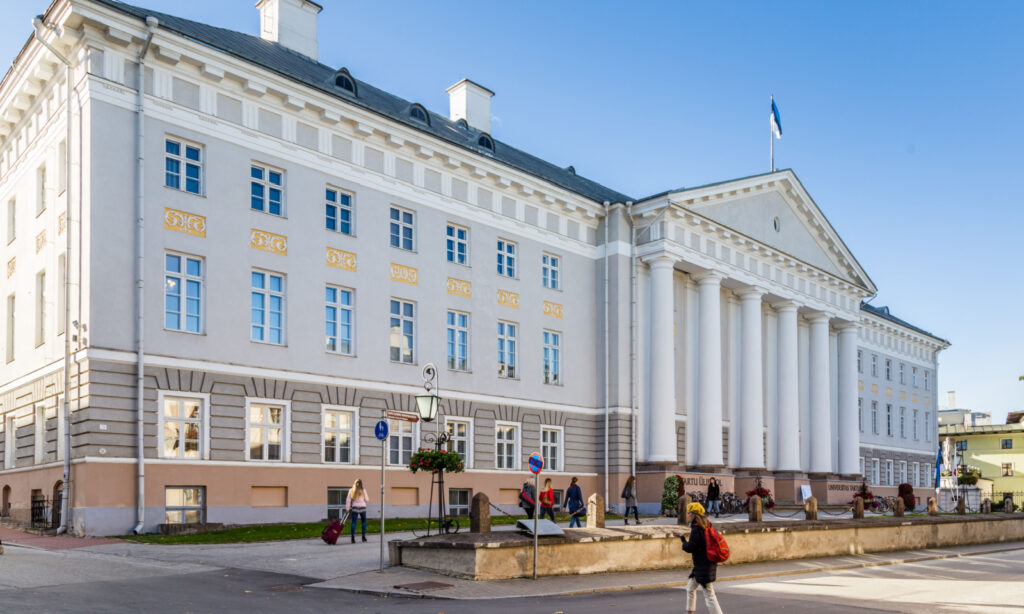
In May 2023, Creditinfo Eesti announced a prize fund to recognize students who have addressed research questions in the fields of money laundering and sanctions in their research. In cooperation with the COBALT law firm and the representatives of the State Money Laundering Bureau, the evaluation committee chose Victoria Helenurme, a master’s student from the University of Tartu, as the winner for her master’s thesis on the topic “Prediction of deletion from the business register due to non-submission of the annual financial report using the example of Estonian companies”.
Victoria Helenurm is from Tallinn and graduated cum laude from the University of Tartu, majoring in Marketing & Financial Management. Today, she works as a financial controller in a company offering energy-saving indoor climate and renewable energy solutions and sees her future in business.

We had an interview with her on the journey of her thesis topic:
The topic of your thesis was “Prediction of deletion from the business register due to non-submission of the annual financial report using the example of Estonian companies” – how did you arrive at this topic?
At the beginning of the summer of 2022, discussions began with people who eventually became my thesis supervisors. My main desire was to write a paper on a current topic in society. This year, the Estonian state penalties for not submitting the annual report became harsher, and in cooperation with my supervisors, we saw that there is a public interest in this area of research and also sufficient data for research.
Why was this topic worth researching?
If, as a person, we take a loan, for example, we are understanding the obligations that come with taking a loan. For me, founding a company or being on its board is a somewhat similar responsibility – as a manager, we have assumed the responsibility, among other things, to report on the progress of our company’s business to the public.
Unfortunately, while we are mostly exemplary in servicing loans, tens of thousands of Estonian companies fail to submit their annual reports on time.
I cannot say whether this difference is due to, among other things, the fact that the penalties for not submitting the annual report have been relatively lenient. But it is certainly worthwhile for us to become more aware that such behavior is problematic.
After all the state of our countries businesses is based largely according to the data of the Business Register. If we have thousands of active companies that do not fulfill their reporting obligations, the financial forecasts, risk analyses, business decisions, etc. of the state, lenders and other parties will suffer in its quality.
The submission deadline (6 months after the end of the financial year) is a very lenient deadline. The business landscape is more and more unpredictable, so the knowledge of the previous year’s business results that arrives half a year later is already outdated. As is typical of our e-government, we would expect that at least certain types of companies could be assigned a much earlier submission obligation to help update our economic data.
What facts became clearer as part of the research?
In my research, I tried to find an answer to the question of whether the deregistration of a company can be predicted purely by looking at how the company’s management has cared about the obligation to submit an annual report in its previous business life.
The Estonian financial world is very much a believer in financial ratios when assessing the business health of a company. I tried to see if it is possible to convincingly assess the business risk of deleting the company by completely setting aside the financial statement.
The studied dataset also proved this – a significantly more accurate forecasting method than financial ratios (prediction accuracy approx. 63%) was the observation of the past behavior of board members (prediction accuracy almost 82%). It can be said that if there is a member of the board of the company who has either delayed or failed to submit the financial year report in previous companies, it is a very clear business risk, which indicates the risk of deletion of the company in question.
How could this research topic be continued?
Although I myself rather do not plan to continue my studies in a doctoral program, I definitely see possibilities for expanding this research topic. The obtained research results could certainly be compared with our neighboring countries – to assess whether in Latvia, Lithuania, Finland, etc. there are similar relationships between corporate delisting and board members’ past due diligence.
Another immediate opportunity for investigation is provided by the amendments to the law that entered into force this year, which toughened the penalties for failure to submit an annual report, among other things. Repeating this research in 5+ years would give an idea of whether business behavior has improved in terms of reporting obligations.
We were very pleased with Victoria’s research, as her research clearly connected with the general theme of our competition – the data of the Business Register and national registers in general are the main factors when applying the KYC principle. Financial data from the company that is not submitted on time or is completely missing, is a clear danger signal when investigating the background of your business partner.
When it comes to risk management – both when creating a customer relationship and during the existence of a customer relationship, up-to-date data from the business register is very necessary. Does the company actually operate; whether the data there (especially the field of activity and financial data) are correct (especially when it comes to the application of enhanced due diligence measures). The given data helps to understand the customer’s activity profile.
If the client does not submit annual reports, it is clear that it may be a riskier client, and this should be taken into account when establishing or monitoring a business relationship in order to mitigate the risk.
Urmas Pai – KYC&Fraud Global Product Manager, Head of the evaluation committee
Creditinfo Estonia
Creditinfo’s Account Information Service Product

In the spring of 2021, the Estonian Financial Supervision Authority authorized Creditinfo Estonia to offer Account Information Service in the Estonian market. In the autumn of 2021, the Estonian Financial Supervision Authority also granted the authorization to provide Account Information Service to the Latvian and Lithuanian markets. This act added to our product portfolio a new, exciting product that benefits our customers in the short and long run. As of today, we have had the Account Information Service in our cross-Baltic product portfolio for two years.
About the Account Information Service
The opportunity to provide Account Information Service emerged when the European Union (EU) Parliament and the EU Council adopted a new directive regulating payment services in the EU internal market on November 25, 2015 (PSD2), which emphasized the expansion of open banking in Europe.
Open Banking refers to provide third-party financial service providers open access to transactional data of bank and financial institution customers, using secure data transmission channels and customer consent.
The Account Information Service is a part of the Open Banking initiative, defined as an online service where the service user (customer) is identified and authenticated via strong identification and authentification means. The service itself means transmitting customer’s bank account data through a secure channel to third party from whom the customer wishes to apply a credit product.
How does Creditinfo provide the Account Information Service?
Using Creditinfo Estonia’s solution, both individuals, which is regulated by the aforementioned payment service directive, and companies can transmit their account information to third parties.
Beside financial sector the possibilities of the Account Information Service can be successfully used in application processes in various sectors. Previously mentioned customer consent is obviously obligatory.
Different sectors that can benefit from account information:
- Public sector companies that provide subsidies to individuals and businesses, where the information in the account details creates significant value when determining subsidies;
- Insurance sector companies, which can use behavioral information from the bank account for determining insurance premiums or simplifying the insurance incident evidence burden;
- Other sectors where value from account information help to create better personalized offers for their products and services.
The strength of our Account Information Service is categorization.
The greatest value of the Account Information Service provided by Creditinfo Estonia comes from categorizing account transactions, which our clients (data recipients) can conveniently use in their business decisions.
Categorization is a solution that can and should be continuously improved over time. Precise and detailed categorization is a top priority for Creditinfo Estonia’s Account Information Service.
The data from the Account Information Service serves also as an input for our Account Information Service Report. The report helps to make more informed business decisions both internally and towards our client’s customers. The report highlights all the key ratios, indicators, “green and red flags” and much more that can be extracted from account information.
The report is designed in a way that can be customized to meet the client’s needs, which make it a tool for everyday business decisions.
More information about the service: https://creditinfo.ee/en/avoid-debts/psd2/