Creditinfo Central Africa Begins Operating CEMAC’s Regional Credit Information Bureau
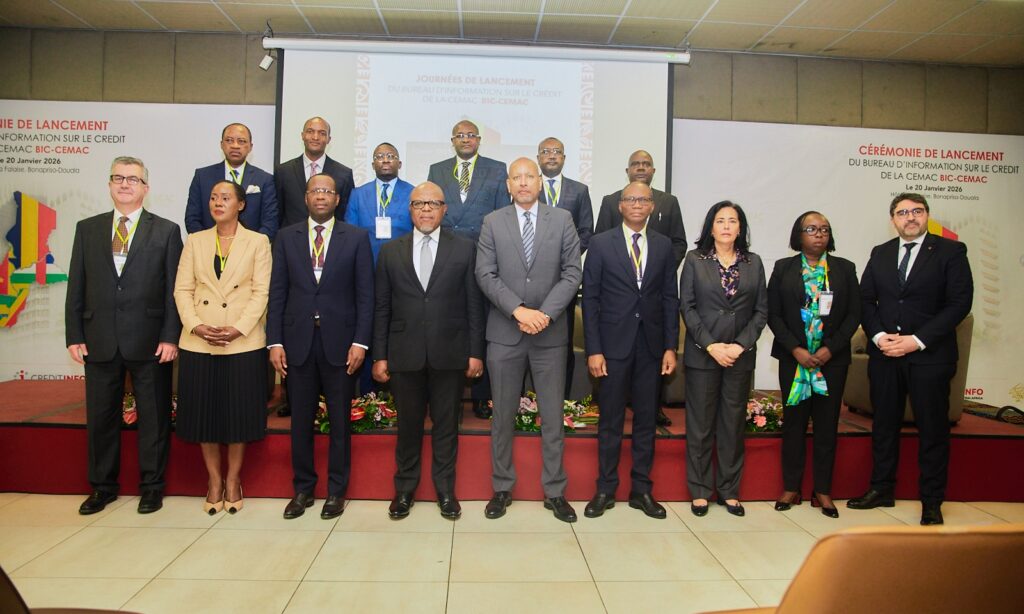
Creditinfo Central Africa (CICA) is now operating the Credit Information Bureau licensed for the CEMAC region (BIC-CEMAC), following the official launch held in Douala on 20 January 2026 in partnership with the Bank of Central African States (BEAC) and with technical assistance from the International Finance Corporation (IFC).
This is an important milestone for the CEMAC financial ecosystem: a modern, region-wide credit information infrastructure designed to strengthen transparency, improve credit risk management, and support broader access to finance, particularly for individuals and micro, small and medium-sized enterprises (MSMEs).
Why it matters
In many credit markets, lenders and borrowers don’t always have access to the same quality of information. This creates an “information gap” which can make lending slower, more expensive, and more conservative than it needs to be, especially for first-time borrowers and smaller businesses.
A well-governed credit information system helps reduce that gap by enabling regulated financial institutions to make more consistent, data-led decisions and support responsible credit growth and greater confidence in the market.
What’s now live
As part of the implementation phase, 61 financial institutions – including 41 commercial banks and 20 microfinance institutions operating across the CEMAC member states – have been connected to the testing platform and are ready for live operations.
The bureau will be rolled out progressively across the region, with the aim of covering all six CEMAC countries: Cameroon, Central African Republic, Congo, Gabon, Equatorial Guinea, and Chad.
What Creditinfo Central Africa is delivering
As the licensed private operator, CICA is responsible for the day-to-day operation of the bureau and for supporting participating institutions with the services that make credit information actionable, including:
- Credit reports that support risk assessment and decisioning
- Credit scoring capabilities to help standardise evaluations
- Secure, scalable technology designed to support regional coverage
- A strong focus on data governance and data quality, which are essential to maximising real-world impact
Satty Saha, Global CEO at Creditinfo Group said: “Our focus is on building trusted infrastructure that strengthens transparency and confidence in the credit market. This will enable lenders to make faster, more informed decisions while ensuring more borrowers – including those traditionally underserved – can access finance on fairer, more inclusive terms.”
What happens next
The bureau operates on a hub-and-spokes model, with a regional hub in Douala and a phased approach to expanding representative coverage across the region.
Over time and in line with the regulatory framework, the ecosystem can be expanded to incorporate additional data sources, such as payment institutions and major service providers. This has the potential to broaden access to credit for people with limited or no traditional credit history, including women, young people, and first-time borrowers.
Learn more
To find out more about Creditinfo Central Africa and the CEMAC bureau, visit creditinfocemac.com.
If you are a participating institution and need support, contact cica.support@creditinfo.com.
Creditinfo invited by IFC to work to expand access to credit
IFC, a member of the World Bank Group, and Bank Al-Maghrib, the Central Bank of Morocco, organised the 5th international symposium to train African and MENA central banks and financial regulators on financial infrastructure and risk management that will help smaller businesses gain access to finance and boost economic growth.
Creditinfo, by invitation of IFC, along with other invitees including senior personnel from Central Banks, lenders’ association, doors, MFI associations, Private Credit Bureau, banking supervisors and policy makers met towards the end of September in Rabat, Morocco. Representatives were principally from Africa and the Middle East, but also from Central Asia, particularly Kyrgyzstan and Azerbaijan and a few participants were from Asia, including Indonesia and Philippines. The four-day event brought together some 40 international experts and 150 attendees from 35 central banks and 50 countries.