Creditinfo Group has acquired full ownership of Latvian credit bureau, KIB Latvia
Move reinforces Creditinfo Group’s long-term investment in financial inclusion and market growth in Latvia.
London, 21st April 2026 — Creditinfo Group, a global leader in credit information and data-driven solutions, today announced that it has completed acquisition of full ownership of KIB Latvia (AS “Kredīt Informācijas Birojs”), following 13 years of successful partnership. The acquisition has increased Creditinfo Group’s stake from 51% to 100%.
This milestone strengthens Creditinfo Group’s strategic presence in Latvia and the wider Baltic region, enabling full operational control of the credit bureau and greater alignment with the company’s long-term regional growth objectives.
With full ownership of the Latvian credit bureau, Creditinfo Group will accelerate investment in the local market, driving the development of more advanced data solutions and expanding the scope of services available to financial institutions, businesses and consumers.
The investments will support the evolution of Latvia’s credit ecosystem, facilitating more robust data sharing, improved risk management capabilities, and the continued promotion of responsible lending practices across the market. As part of this, Creditinfo Group will introduce enhanced analytics, expanding digital capabilities, and new product offerings, including expansion into Business Information services, Fraud and Identity solutions, and a new generation of consumer-focused products designed to improve financial inclusion, transparency, and access to credit.
“This acquisition reflects our long-term commitment to Latvia and our confidence in the market’s continued growth,” said Satty Saha, Group CEO at Creditinfo Group. “With experience across 30 regions worldwide and strong innovation capabilities, we are well-positioned to deliver greater value to Latvia’s financial services ecosystem and support better-informed decision-making for businesses and consumers alike.”
Elari Tammenurm, Regional Director, Continental Europe at Creditinfo Group said: “We would like to extend our sincere thanks to our fellow shareholders — Swedbank, SEB, Citadele, and Luminor — for their constructive collaboration throughout the process. We also greatly appreciate the support of our advisors at COBALT in Estonia and Latvia. We’re excited about the future and expanding access to finance in the region.”
Over the next few years, Creditinfo Group will continue to invest in technology, talent, and partnerships in Latvia, ensuring the credit bureau remains at the forefront of innovation while contributing to the stability and growth of the financial sector.
-END-
About Creditinfo Group
Established in 1997 and headquartered in London, UK, Creditinfo is a provider of credit information and risk management solutions worldwide. As one of the fastest-growing companies in its field, Creditinfo facilitates access to finance, through intelligent information, software and decision analytics solutions.
With more than 30 credit bureaus running today, Creditinfo has the most considerable global presence in this field of credit risk management, with a significantly greater footprint than competitors. For decades it has provided business information, risk management and credit bureau solutions to some of the largest lenders, governments and central banks globally to increase financial inclusion and generate economic growth by allowing credit access for SMEs and individuals.
For more information, please visit www.creditinfo.com
Creditinfo Leadership Team Visit Reinforces Strategic Partnerships Across East Africa

Over the past two weeks, senior leaders from Creditinfo travelled across East Africa, engaging with teams and partners in Tanzania, Uganda, and Kenya. The regional visit, led by Satrajit Saha (Satty), CEO of Creditinfo Group, and John Cannon, Chief Commercial Officer, focused on strengthening relationships, connecting with local teams, and advancing conversations around financial innovation and fraud prevention across the region.
Throughout the visit, the leadership team held town halls with local Creditinfo teams, providing an opportunity to connect in person, recognise the work being done across the region, and reinforce the company’s shared vision for the future.


Alongside internal engagements, the visit included extensive meetings with CEOs and senior leadership teams from organizations across the financial ecosystem, including banks, telecommunications companies, microfinance institutions, and other partners. These discussions focused on the evolving financial landscape in East Africa and the growing importance of trusted data, digital identity, and fraud prevention solutions in supporting secure and inclusive financial services.
A highlight of the visit was the official launch of Creditinfo’s Fraud & ID Solution in Uganda, which brought together over 80 attendees from across the financial and technology sectors. Held at the Sheraton Kampala Hotel, the event marked an important step toward strengthening identity verification and fraud prevention in the market.





Opening remarks from Satty, Group CEO and Mark Charles Mwanje, Managing Director of Creditinfo Uganda, emphasized the growing importance of trusted digital identity solutions in today’s rapidly evolving financial landscape.


Guests also heard from Rob Meakin, who introduced the Fraud & ID solution and demonstrated how it supports institutions in identifying risk, preventing fraud, and strengthening trust across financial ecosystems.

A keynote address by Mackay Aomu, Director of Non-Bank Financial Institutions Supervision at the Bank of Uganda, underscored the importance of strong digital infrastructure and strategic partnerships in combating financial crime.
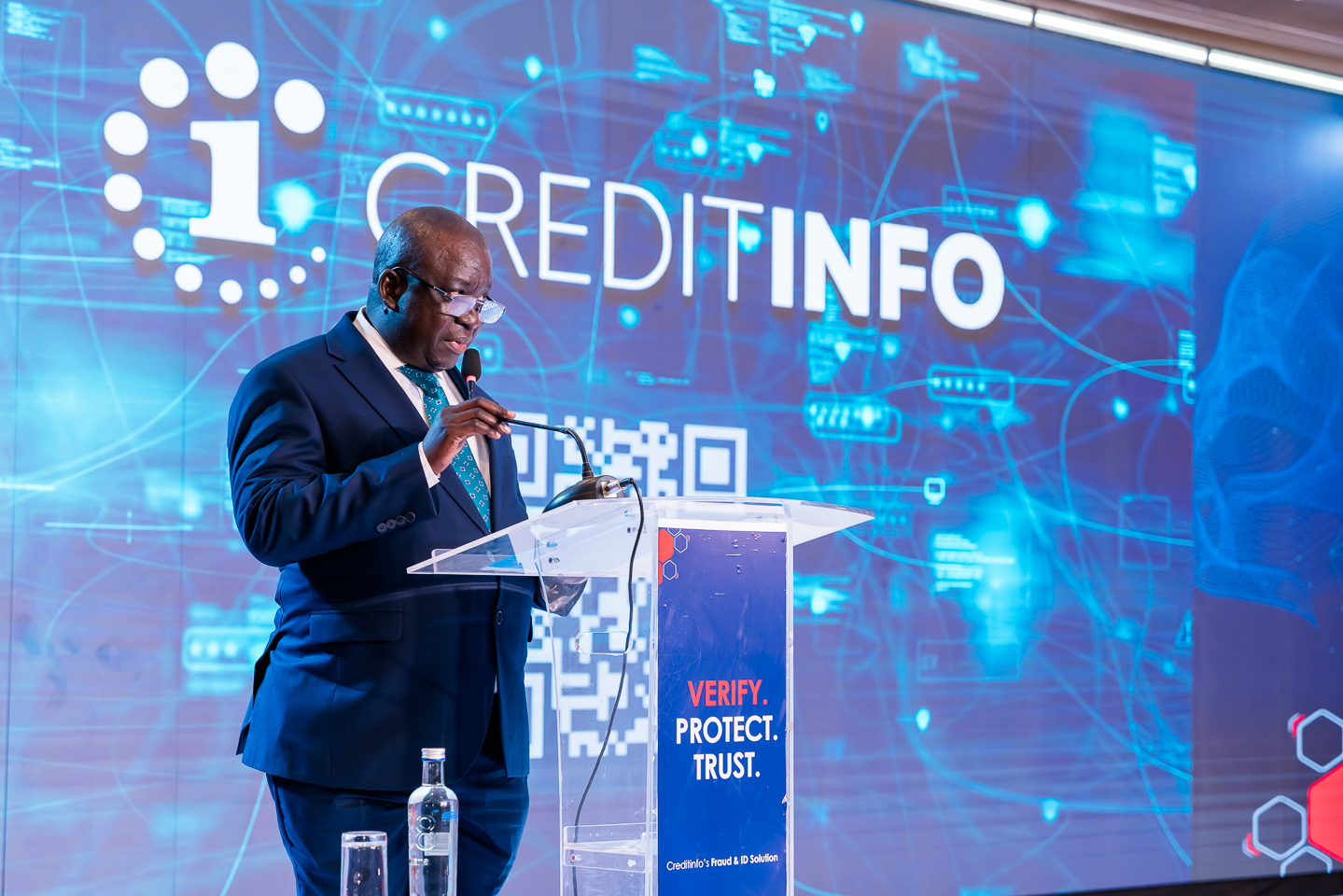
The evening concluded with a fireside discussion moderated by John Cannon titled “Collaborative Intelligence and Digital Innovation: Strengthening Fraud Prevention.” The panel brought together leading voices from across the industry, including Wilbrod Owor of the Uganda Bankers Association, Jackie Mbabazi from the Association of Microfinance Institutions of Uganda, Bwire Ivan Peter of the Financial Intelligence Authority, and Joseph Lutwama from Financial Sector Deepening Uganda.


The East Africa tour concluded in Kenya, where the team met with colleagues during a gathering that celebrated the continued growth and achievements of the regional team. The visit reinforced the strength of Creditinfo’s partnerships across East Africa, highlighting the organization’s continued focus on collaboration, innovation, and supporting stronger financial ecosystems across the region.
BIC-UEMOA (West African Economic and Monetary Union) Data Cafè – Dakar

On February 16th 2026, the second edition of the BIC-UEMOA Data Café was held at the Pullman Dakar Teranga in Dakar. The event brought together institutional stakeholders and financial sector professionals to discuss key issues surrounding data valorization and its strategic role within the financial ecosystem.
Organized in an interactive and engaging format, the workshop provided a valuable platform for dialogue on data quality, its contribution to informed decision-making, and its role in enhancing institutional performance.
A Strong Message from the Managing Director

In his welcome address, Mr. Sidy KOUNTA, Managing Director of Creditinfo West Africa, emphasized that this workshop represents a significant milestone in the collective effort to strengthen the effectiveness and relevance of the credit information system.
He highlighted the substantial progress achieved in Senegal, where momentum remains particularly strong:
- Nearly 8 million declared credit contracts;
- More than 3 million borrowers;
- 59 data providers, including 34 banks and financial institutions, 20 microfinance institutions (MFIs), and 5 major utility companies.
These results reflect continuous improvements in data coverage, quality, and reliability. They enable financial institutions to gain clearer visibility into their clients’ creditworthiness and to enhance the quality and soundness of their lending decisions.
Strong Institutional Representation
The event benefited from the presence of leading institutional partners, notably the BCEAO (Central Bank of West African States), represented by Mr. DAME THIAM, as well as representatives of professional associations from the local financial sector.





Their participation underscores the shared commitment to strengthening the credit information system and deepening collaboration among all stakeholders.
Participants — including data officers, project managers, Chief Information Officers, risk managers, and compliance officers from institutions affiliated with the BIC — attended technical sessions delivered by the Director of Information Systems, Mr. Étienne Silué, together with Mrs. Faty LO, Database Administrator and Support Officer.
Aligned with the 2026 Strategic Action Plan
As part of the implementation of its 2026 Strategic Action Plan, the BIC-UEMOA continues to conduct outreach and capacity-building initiatives for its regulated entities and technical partners. These initiatives aim to enhance understanding of the framework, improve the quality of reported data, and strengthen operational cooperation.
This proactive approach supports stakeholders in effectively leveraging credit information system tools and promotes optimal data utilization in the service of financial stability and sustainable development across UEMOA.
Promising Outlook
The success of this second edition of the Data Café reflects the growing interest in data-driven governance within the financial sector and reinforces the ongoing commitment to fostering a culture of reliable information in support of institutional performance and economic development. It is worth recalling that the first edition was held on April 29, 2025, in Côte d’Ivoire, with strong participation from all stakeholders.
To date, the BIC-UEMOA has recorded more than 47 million contracts in its database, representing over 20 million clients, with 317 data providers across the 8 UEMOA Member States.
For more information, please visit: creditinfo-uemoa.com
Creditinfo Central Africa Begins Operating CEMAC’s Regional Credit Information Bureau
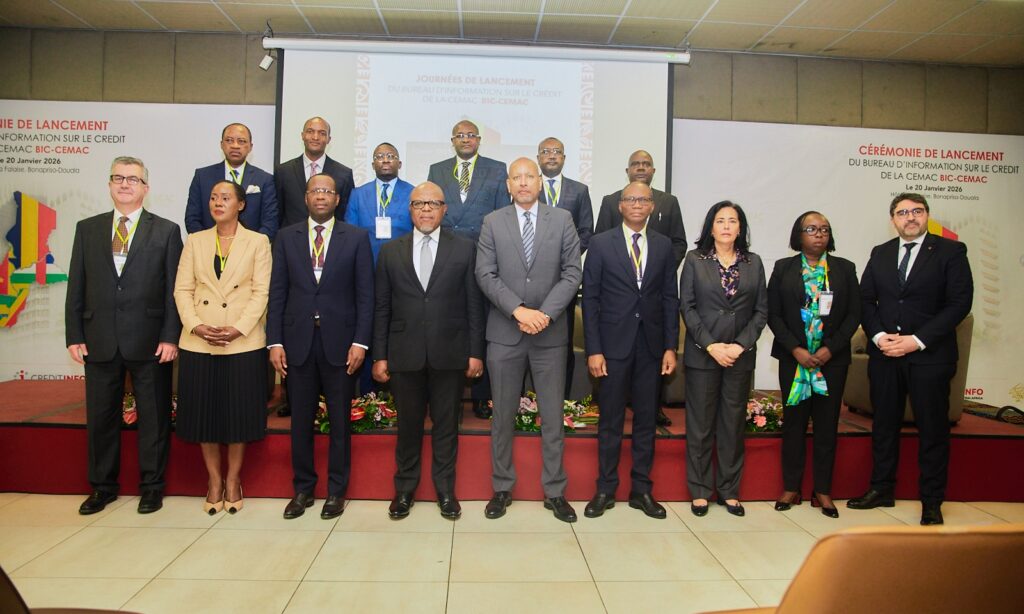
Creditinfo Central Africa (CICA) is now operating the Credit Information Bureau licensed for the CEMAC region (BIC-CEMAC), following the official launch held in Douala on 20 January 2026 in partnership with the Bank of Central African States (BEAC) and with technical assistance from the International Finance Corporation (IFC).
This is an important milestone for the CEMAC financial ecosystem: a modern, region-wide credit information infrastructure designed to strengthen transparency, improve credit risk management, and support broader access to finance, particularly for individuals and micro, small and medium-sized enterprises (MSMEs).
Why it matters
In many credit markets, lenders and borrowers don’t always have access to the same quality of information. This creates an “information gap” which can make lending slower, more expensive, and more conservative than it needs to be, especially for first-time borrowers and smaller businesses.
A well-governed credit information system helps reduce that gap by enabling regulated financial institutions to make more consistent, data-led decisions and support responsible credit growth and greater confidence in the market.
What’s now live
As part of the implementation phase, 61 financial institutions – including 41 commercial banks and 20 microfinance institutions operating across the CEMAC member states – have been connected to the testing platform and are ready for live operations.
The bureau will be rolled out progressively across the region, with the aim of covering all six CEMAC countries: Cameroon, Central African Republic, Congo, Gabon, Equatorial Guinea, and Chad.
What Creditinfo Central Africa is delivering
As the licensed private operator, CICA is responsible for the day-to-day operation of the bureau and for supporting participating institutions with the services that make credit information actionable, including:
- Credit reports that support risk assessment and decisioning
- Credit scoring capabilities to help standardise evaluations
- Secure, scalable technology designed to support regional coverage
- A strong focus on data governance and data quality, which are essential to maximising real-world impact
Satty Saha, Global CEO at Creditinfo Group said: “Our focus is on building trusted infrastructure that strengthens transparency and confidence in the credit market. This will enable lenders to make faster, more informed decisions while ensuring more borrowers – including those traditionally underserved – can access finance on fairer, more inclusive terms.”
What happens next
The bureau operates on a hub-and-spokes model, with a regional hub in Douala and a phased approach to expanding representative coverage across the region.
Over time and in line with the regulatory framework, the ecosystem can be expanded to incorporate additional data sources, such as payment institutions and major service providers. This has the potential to broaden access to credit for people with limited or no traditional credit history, including women, young people, and first-time borrowers.
Learn more
To find out more about Creditinfo Central Africa and the CEMAC bureau, visit creditinfocemac.com.
If you are a participating institution and need support, contact cica.support@creditinfo.com.
Creditinfo and NOTO partner to expand market access to modern fraud and AML controls for banks, fintechs and lenders

Collaboration combines data and tech to strengthen financial crime prevention
12th November 2025 – Creditinfo, a global provider of credit risk and data intelligence, and NOTO, an enterprise platform for fraud prevention and anti-money laundering (AML), today announced a partnership to bring modern, data-rich financial crime controls to banks, fintechs and lenders across multiple markets. The agreement pairs Creditinfo’s in-market coverage and data expertise with NOTO’s adaptable decisioning and case-management platform, aiming to enhance risk controls while preserving a seamless customer experience.
Financial institutions continue to face higher fraud losses, sharper regulatory scrutiny, and a highly dynamic environment that demands greater agility, while onboarding speed expectations continue to rise. The partnership focuses on measurable outcomes – stronger KYC and screening, better detection and monitoring, and streamlined investigations – delivered in a way institutions can roll out and scale without major IT upheaval.
Partnership highlights:
- Market access + enablement: Creditinfo distribution and NOTO technology delivered together, enabling faster rollout
- Outcome focus: Will reduce fraud losses and false positives, strengthen AML readiness, and shorten time from pilot to production.
- Operational fit: Simple to deploy where it will have the most impact then extend across the lifecycle as requirements evolve.
Rob Meakin, Fraud and Identity Director at Creditinfo said: “Clients need practical improvements they can deploy and adapt quickly. By combining high-fidelity risk and trust signals from Creditinfo with NOTO’s agile, high capacity, low latency technology stack we’re giving financial institutions a balanced, risk-aware method of strengthening KYC, screening and monitoring that can be easily tailored to local conditions.”
Ivan Stefanov, CEO and Co-Founder at NOTO, said: “Creditinfo brings the data; NOTO turns it into decisions. Financial institutions don’t need another dashboard—they need decisions they can trust in milliseconds. By combining Creditinfo’s depth of bureau and alternative data with NOTO’s real-time risk decisioning, we give clients a single risk view across onboarding, fraud, and AML. The result: Less financial crime. More business.”
The joint offering is now available via Creditinfo and NOTO. Organisations can contact either company for details.
END.
About Creditinfo
Established in 1997 and headquartered in London, UK, Creditinfo is a provider of credit information and risk management solutions in over 30 countries worldwide. As one of the fastest-growing companies in its field, Creditinfo facilitates access to finance, through intelligent information, software, and decision analytics solutions.
About NOTO
NOTO is a modular, scalable, and adaptable platform for fraud prevention and AML compliance, built by experts to deliver measurable outcomes across the customer lifecycle.
How Economic Uncertainty Manifests in Payment Defaults Across the Baltics

In recent years, the economic environment in the Baltics has become faster-moving and less predictable. Previously, it took 12–18 months after an economic turning point for payment difficulties among companies and individuals to appear in the payment default register. Today, this happens much sooner — often within 6–9 months, and in some sectors even within a single quarter.
Payment Defaults as an Early Warning
Creditinfo manages the payment default register, which collects daily data from banks, leasing companies, utilities, telecoms, and other businesses. This provides a comprehensive overview of market payment behavior trends.
However, not all payment defaults become publicly visible, which makes the aggregated data in the register a valuable early indicator — showing shifts in the economy before they surface publicly or are reflected in official economic statistics.
Two Waves: Companies First, Individuals Later
Based on payment default data, economic difficulties typically unfold in two phases:
- First, companies. When costs rise or customers delay payments, businesses face liquidity challenges — sometimes visible within a single quarter.
- Then, households. Initially, savings and financial buffers help, but over time, pressure reaches individuals, leading to unpaid bills.
In other words, a rise in company payment defaults often serves as an early warning that the economy is entering a more difficult phase.
Three Countries, Three Speeds
While overall trends are similar across the Baltic countries, shaped by global economic developments, the pace and timing differ:
- Estonia tends to see payment defaults appear more quickly after economic challenges emerge, but both companies and individuals also recover and repay debts faster than elsewhere in the Baltics.
- Latvia shows greater seasonality in debt repayment and reporting across certain sectors compared to its neighbors.
- Lithuania tends to experience risks materializing into payment defaults later than the other Baltic states — reflecting higher resilience — but once defaults occur, they persist longer, meaning problems take more time to resolve.
Which Sectors Show Changes First?
The most sensitive sectors include:
- Construction, where rising costs and changes in financing conditions have an immediate impact.
- Transport, logistics, and wholesale, which quickly feel shifts in the rhythm of the economy.
- Retail and services, where payment difficulties emerge as consumer purchasing power declines.
What Does This Mean for Businesses?
As the economy changes faster than before, annual risk assessments are no longer enough. Companies that regularly use payment default data in evaluating partner and customer credit risk can respond more quickly — by adjusting credit limits, updating terms, or planning sales volumes more realistically.
The era when risks evolved over years is over — today, success belongs to those who spot changes first and adapt fastest.
In Summary
In the Baltics, economic and credit risks now shift quarter by quarter, not year by year. Companies that use payment default data as early warning signals can keep a close eye on their business environment — and stay one step ahead of the market.
Best Practices for How Companies Assess Credit Risk in Their Supply Chains

Effective credit risk assessment is a cornerstone of supply chain management for both global and local companies. With increasingly interconnected trade networks and growing reliance on cross-border suppliers, the financial stability of business partners can directly impact a company’s ability to deliver products and services. A single supplier’s default, bankruptcy, or liquidity crisis can trigger significant disruptions, resulting in delayed deliveries, reputational damage, and even financial loss.
For this reason, organizations across industries are adopting structured approaches to evaluate and monitor supplier credit risk. Below are some of the best practices that companies use to strengthen resilience across their supply chains.
Leveraging Credit Reports and Ratings
The most common practice is the use of credit reports and ratings from specialized agencies such as Dun & Bradstreet, Creditsafe, Creditinfo, Moody’s Analytics, or Experian. These reports consolidate a supplier’s financial history, payment behavior, outstanding obligations, and credit score into an accessible profile.
Such data-driven insights provide companies with an objective assessment of a supplier’s creditworthiness. For instance, Coca-Cola integrates credit data into its supplier evaluation process to ensure that new partnerships are built on reliable financial foundations. By doing so, the company reduces the likelihood of disruptions caused by financially unstable partners and maintains a consistent supply of raw materials.
Conducting Broader Due Diligence Assessments
Credit information alone does not always capture the full picture of a supplier’s risk profile. Many organizations enhance their analysis by conducting comprehensive due diligence assessments that combine financial data with operational, geopolitical, and reputational factors.
Siemens, for example, conducts detailed financial risk analyses as part of its supplier onboarding and monitoring process. The company examines suppliers’ balance sheets, liquidity ratios, and debt structures alongside qualitative factors such as compliance with regulations, corporate governance, and industry-specific risks. The banking sector follows a similar model — institutions such as APS Bank in Malta use financial and non-financial criteria to ensure they collaborate with counterparties that are not only solvent but also reputable and sustainable.
This holistic approach ensures that companies do not overlook hidden vulnerabilities that might undermine supply chain stability.
Continuous Monitoring and Real-Time Alerts
Risk assessment should not be viewed as a one-time exercise. Suppliers’ financial health can change rapidly due to market shocks, regulatory shifts, or internal mismanagement. To address this, companies increasingly adopt continuous monitoring systems that provide real-time tracking of critical credit-related events.
These systems may be embedded in credit rating agencies’ platforms, credit bureaus, or integrated directly into enterprise resource planning (ERP) solutions such as SAP Ariba. They monitor indicators such as late payment patterns, bankruptcy filings, credit downgrades, or sudden declines in liquidity.
For example, Ford Motor Company uses real-time monitoring to detect early warning signs of supplier distress. By acting proactively — whether by diversifying sourcing or negotiating alternative arrangements — Ford minimizes disruptions and protects its production schedules.
Integrating Technology and Analytics
The growing adoption of digital tools has made credit risk assessment more sophisticated. Artificial intelligence (AI), machine learning, and predictive analytics are increasingly used to forecast potential supplier distress before it becomes visible in traditional credit reports. These tools analyze not only financial statements but also alternative data sources such as trade flows, market sentiment, and macroeconomic indicators.
For multinational corporations, this level of insight enables more strategic risk management, while smaller businesses can use simplified versions of these tools to protect themselves against supplier failures. The democratization of credit risk technology is helping local and regional players build more resilient supply chains that were once only feasible for global giants.
Building Resilient Supply Chains Through Credit Risk Practices
By prioritizing structured credit risk evaluation, companies safeguard their operations and strengthen resilience against shocks. Organizations such as Coca-Cola, Siemens, and Ford demonstrate how integrating financial data, due diligence, and continuous monitoring can create supply chains that are both stable and adaptable.
Importantly, this approach is no longer limited to multinationals. Increasingly, smaller and local businesses are adopting similar practices, often supported by affordable credit bureau services, regional data providers, and ERP platforms tailored for SMEs. This shift is especially critical in regions where supply chain disruptions can have amplified effects due to concentrated supplier networks.
Conclusion
Credit risk assessment is more than a compliance exercise — it is a strategic enabler of operational continuity. By leveraging credit reports, conducting broader due diligence, adopting real-time monitoring systems, and embracing new technologies, companies can reduce vulnerabilities and build stronger supplier relationships.
In a global economy marked by volatility and uncertainty, businesses that make credit risk evaluation a core component of supply chain management position themselves to navigate challenges more effectively. Whether multinational or local, organizations that invest in these practices foster resilience, trust, and long-term stability across their supply chains.
Authored by:
Martin Coufal,
Partnership Director, Creditinfo Group.
LLMs Have Transformative Potential in Financial Services and Rely on Teams That Shape Them
Large language models (LLMs) are disrupting established industries and creating new business opportunities. They can also bring significant value to financial institutions.
While most early implementations have focused on client-facing applications like onboarding, call-center automation and digital assistants, much of LLMs’ potential lies in operational functions. For example, they can:
- Enhance model management by creating model documentation, explaining complex models in plain language and assisting in model validation workflows.
- Boost anomaly detection enabling faster escalation and resolution by human teams.
- Support audit and compliance activities by summarizing model behavior, identifying compliance gaps and documenting evidence for regulators.
- Enhance internal knowledge management by helping staff quickly retrieve information from documents.
These behind-the-scenes applications drive efficiency and free up human teams to focus on strategic decision-making and higher-value tasks. Successful adopters are able to unlock such synergies.
Human-LLM Collaboration
More broadly, human-AI collaboration in finance is evolving. It has become clear that human strengths, such as empathy, judgment and contextual understanding, are critical for high-stakes interactions and that fully autonomous systems still face limitations in certain client-facing roles.
Therefore, financial institutions should focus on building systems allowing AI to enhance, rather than replace human work and allow staff to remain at the center of complex decisions and client relationships. For example:
- Analysts can use LLMs to draft credit assessments, which experts then finalize.
- Compliance officers can use AI to flag suspicious transactions, which are then reviewed by humans applying their expertise and contextual knowledge before escalation.
- Advisors can leverage AI to brainstorm investment strategies, but then deliver advice with empathy and consideration of their clients’ circumstances.
Responsible Rollout
To stay ahead and fully leverage the potential of LLMs while balancing innovation with regulatory requirements, financial institutions should adopt a phased, risk-based approach starting with low-risk, high-value use cases in controlled environments.
As part of this, regular testing in sandbox environments is essential to refine models before wider deployment. Benchmarking LLM outputs against traditional, well-understood models adds another layer of interpretability and reliability. Equally important is continuous human oversight, particularly for impactful decisions where trust, accountability and transparency are necessary.
Looking ahead, institutions must invest in both infrastructure and talent to leverage LLMs responsibly. Scalable computation environments are needed to support LLM training and secure data pipelines are vital for compliant and well-governed data processing. But infrastructure alone is not enough. Success with LLMs will depend on the people behind them. The right mix of machine learning engineers, risk and domain experts, and legal professionals who specialize in AI regulation is needed.
LLMs in financial services are still at an early stage, but with the right mix of technology, processes and talent working toward a shared vision for AI, LLMs can deliver significant value both in and beyond client-facing roles without introducing unnecessary risk.
Creditinfo Launches ESG Hub to Fast-track Baltic Companies’ Access to Reliable Sustainability Data
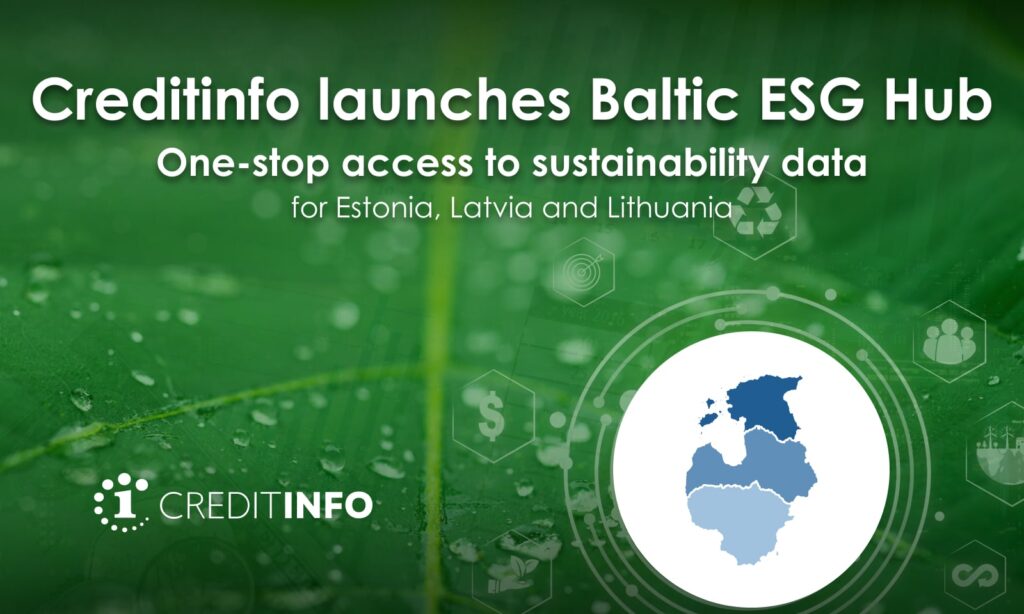
New one-stop-shop solution aggregates information from more than 20 external sources, helping banks and businesses boost their ESG strategies, manage risk, and streamline their supply-chain transparency.
Creditinfo unveiled ESG Hub, the Baltic region’s first pan-regional platform that gives lenders and businesses instant, standardised access to the environmental, social and governance (ESG) data they need to comply with regulations, assess counterparties and execute sustainability strategies.
Building on Creditinfo’s long track-record of turning complex business information into accessible actionable insight, ESG Hub consolidates data from 20-plus public and proprietary data sources from Estonia, Latvia and Lithuania into one standardised API feed and ready-to-use report. By merging country-specific registries into a single, harmonised view, the platform lets banks and businesses manage ESG data uniformly across all three markets. Users can pull company-level metrics—from carbon emissions and energy intensity to board diversity and community impact—within seconds, eliminating the need to piece together separate national datasets manually.
“We want to accelerate the sustainability journey for the Baltic economies, and it all starts with easy access to trusted information. Until now, assembling ESG data has been difficult and time-consuming; companies have spent substantial time on these tasks, and the process has been inefficient,” said Elari Tammenurm, Regional Director, Continental Europe at Creditinfo. “With ESG Hub, any financial institution or company can integrate harmonised data directly into their existing workflows, cutting cost and complexity while improving decision speed.”
Proven model, now scaled to the Baltics
Creditinfo first introduced an ESG data service in Iceland in 2023; rapid adoption by local banks and corporates highlighted the growing importance of reliable sustainability intelligence. “The strong uptake we saw in Iceland showed us how big the need is,” noted Reynir Smári Atlason, Managing Director of Sustainability at Creditinfo. “We’re now bringing those learnings, and a richer dataset, to the Baltic markets.”
The company will continue to expand ESG Hub’s data source coverage and analytical modules over the coming months. Future roll-outs in additional Creditinfo markets are also planned.
For more information visit ESG Hub
Creditinfo & Little App Partner To Enhance financial Inclusion In Kenya

Little App’s new feature gives individuals and businesses instant, on-the-go access to their credit information
Nairobi, 18th June 2025 – Creditinfo, a global service provider for credit information and risk management solutions, has partnered with Little App, one of Africa’s most forward-thinking super apps, to enable Little App users to access their credit reports and monitor their credit scores instantly and securely within the app’s Financial Services section.
With the integration of Creditinfo’s credit bureau data into the app, individuals and businesses can conveniently view their credit information through their mobile devices. Whether applying for a loan, improving creditworthiness, or monitoring one’s financial health, this new feature makes it simple, fast, and user-friendly. Having this information available in one place will help people in Kenya to take control of their finances, make more informed decisions, and access credit with confidence.
“Our partnership with Little reflects more than just a shared goal; it’s a concrete step toward increasing financial inclusion and transparency across Kenya and the African region in the foreseeable future. Data is key to unlocking financial opportunity for people, and our priority is to make access to real-time, reliable credit information simpler and more intuitive. We’re immensely proud to deliver a solution that brings tangible benefits to people’s financial journeys,” said Kamau Kunyiha, Regional CEO East and Southern Africa at Creditinfo.
Kamal Budhabhatti, CEO at Little said: “Africa is undergoing a remarkable digital evolution, with mobile technology transforming how people live and engage with services. Through our collaboration with Creditinfo, we’ve built a solution that meets people where they are – on their phones – and fits seamlessly into their daily lives. We want to demystify complex financial data for everyone, empowering users to make informed decisions while driving lasting social and economic impact.”
-END-
About Creditinfo
Established in 1997 and headquartered in London, UK, Creditinfo is a provider of credit information and risk management solutions worldwide. As one of the fastest-growing companies in its field, Creditinfo facilitates access to finance, through intelligent information, software and decision analytics solutions.
With more than 30 credit bureaus running today, Creditinfo has the most considerable global presence in this field of credit risk management, with a significantly greater footprint than competitors. For decades it has provided business information, risk management and credit bureau solutions to some of the largest, lenders, governments and central banks globally to increase financial inclusion and generate economic growth by allowing credit access for SMEs and individuals.
For more information, please visit www.creditinfo.com
About Little
Little App is a pan-African super app that has been transforming everyday experiences since 2016. With nearly a decade of innovation, Little offers a wide range of tech-driven solutions across mobility, payments, delivery, healthcare, and lifestyle services.
Operating in multiple African countries, Little serves both individual users and organizations—delivering convenience, affordability, and efficiency. From ride-hailing to enterprise transport solutions and digital wallets, Little is at the forefront of enabling digital and financial inclusion across the continent.
For more information, please visit www.little.bz